

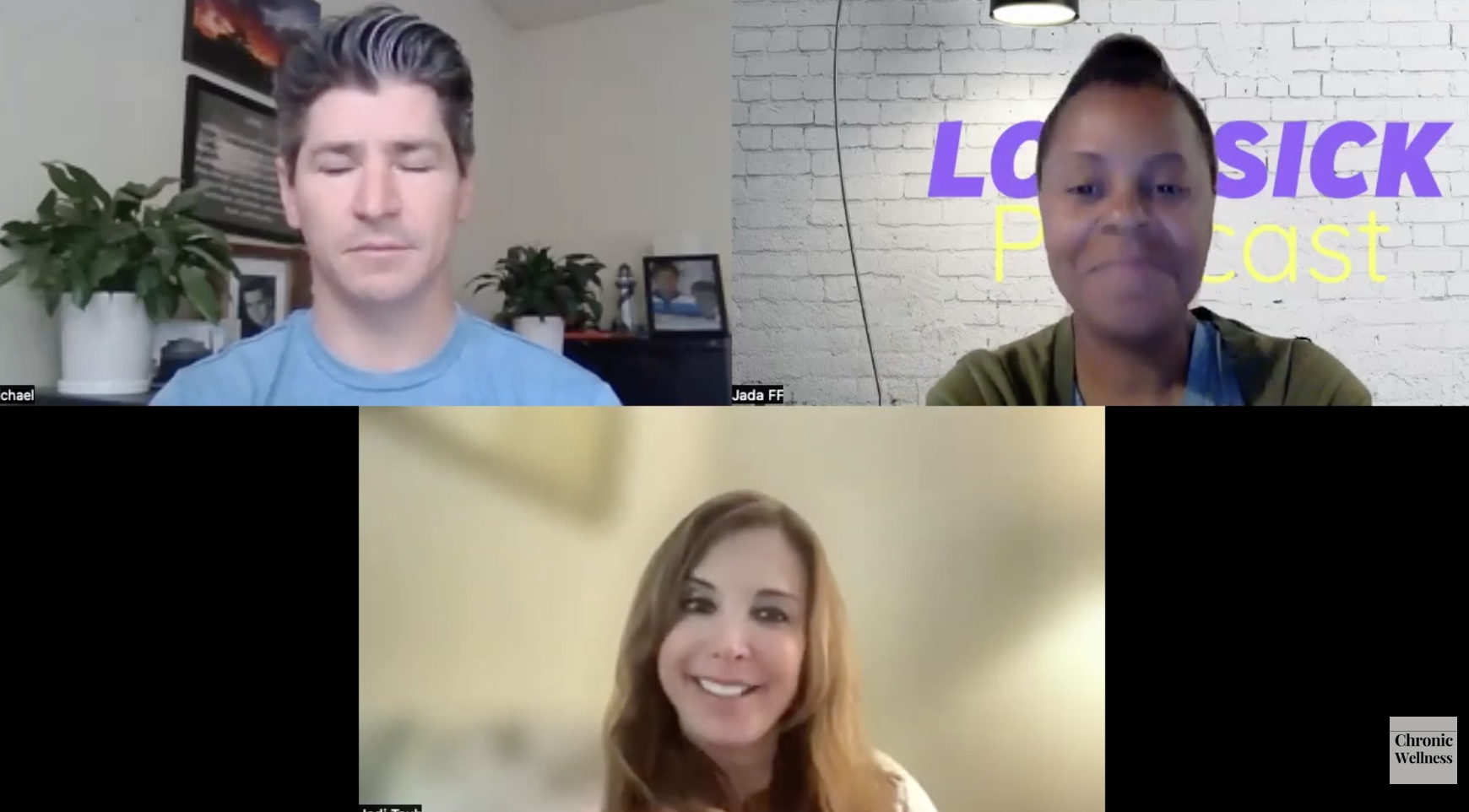
Lovesick Podcast
I had the pleasure of joining the Lovesick Podcast to discuss relationships and dating with a chronic health care condition. Explored topics like sharing your chronic illness story, the importance of finding and building secure attachments, and the reminder that we all are deserving of love.
A Guide for Immunocompromised Individuals in a Post-Pandemic World
By Tracy Asamoah, MD. featuring Jodi Taub, LCSW, PLLC
"The responsibility of navigating a post-pandemic world falls disproportionately on those most at risk."
Key Highlights:
Ongoing Risks: Immunocompromised individuals remain vulnerable even as society moves beyond strict COVID-19 precautions.
Protective Measures: Masking, improving ventilation, and staying up to date on vaccinations help reduce risk.
Advocating for Safety: Communication strategies for requesting accommodations in workplaces and public spaces.
Emotional Well-Being: Acknowledging the mental toll of long-term precautions and finding support.
Community and Connection: Balancing safety with maintaining a fulfilling social life.
What Is Common Variable Immunodeficiency?
Common variable immunodeficiency (CVID) is a primary immune deficiency – one of more than 450 types. Patients are vulnerable to serious infections and health complications, but treatment can reduce those risks.
Key Highlights:
How common is CVID?
What causes CVID?
What are the symptoms of CVID?
How is CVID diagnosed?
What is the outlook for people with CVID?
5 Ways to Manage Chronic Illness Burnout
Having lived with a primary immunodeficiency and working as a therapist with chronic illness patients, I know firsthand the toll of medical burnout. It’s more than exhaustion—it’s managing daily routines, appointments, and treatments without the usual sense of accomplishment or recognition. Let’s talk about how we can address this together.
Key Highlights:
Prioritize your most pressing health care needs
Prepare for uncomfortable procedures
Create your own reward system
Invite your physician into the conversation
Cultivate your community
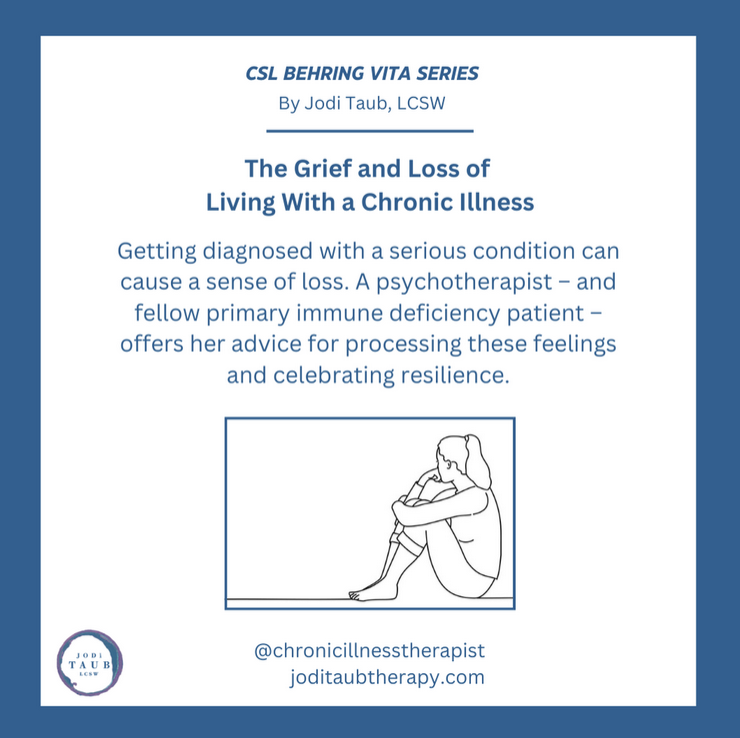
The Grief and Loss of Living With a Chronic Illness
Getting diagnosed with a serious condition can cause a sense of loss. A psychotherapist – and fellow primary immune deficiency patient – offers her advice for processing these feelings and celebrating resilience.
Key Highlights:
Mourning and Validating Loss of Identity
Forming New Friendships and Support Systems
Finding New Occupational or Educational Paths
Scheduling and Looking Forward to Future Events
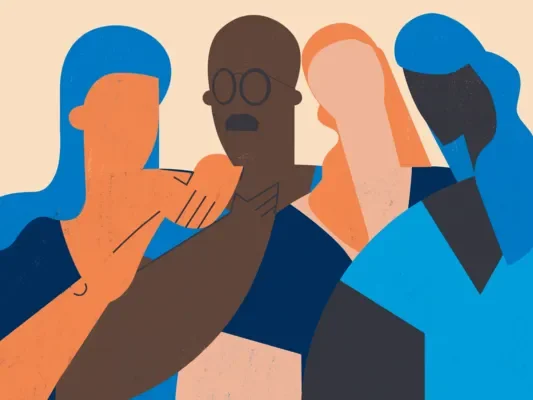
How to Make New Friends as an Adult When You Have a Chronic Illness
By Katie Camero, featuring recommendation by Jodi Taub, LCSW, PLLC.
There are others out there who will support you. Here’s how to find them.
Key highlights:
1. Find your people.
2. Explore new hobbies that support your needs.
3. Be honest about your illness when you’re ready.
4. Don’t underestimate the value of acquaintances.
5. Give people second chances.
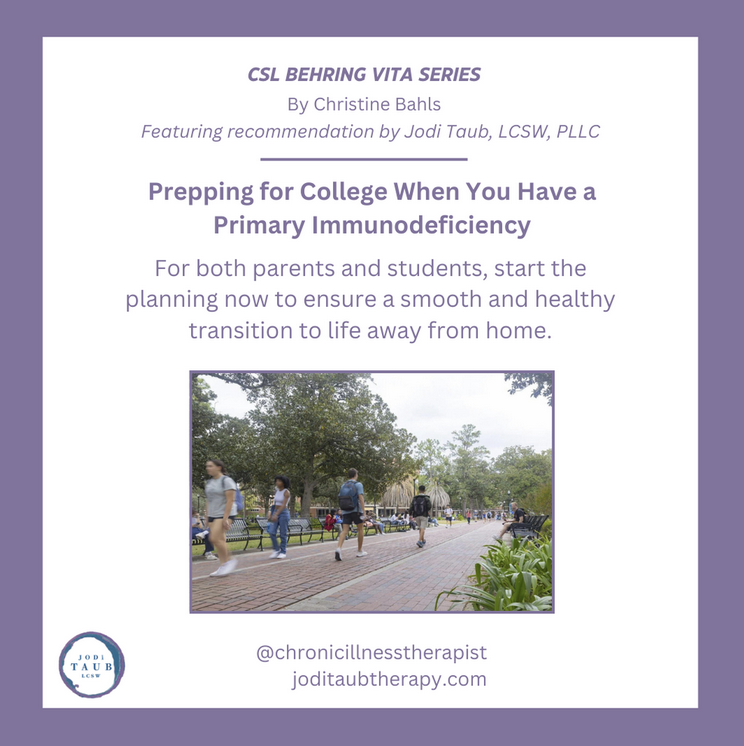
Prepping for College When You Have a Primary Immunodeficiency
By Christine Bahls, featuring recommendation by Jodi Taub, LCSW, PLLC.
For both parents and students, start the planning now to ensure a smooth and healthy transition to life away from home.
Key highlights:
1. Turn to the Immune Deficiency Foundation for support with the college transition.
2. Do the paperwork before leaving for college
3. Agree to a few musts, like wearing a medical alert bracelet and storing emergency info on the phone.
4. Anticipate emotional questions, like whether to tell roommates and others about the illness.
5. Expect an adjustment period while the student assumes responsibility for matters large and small.
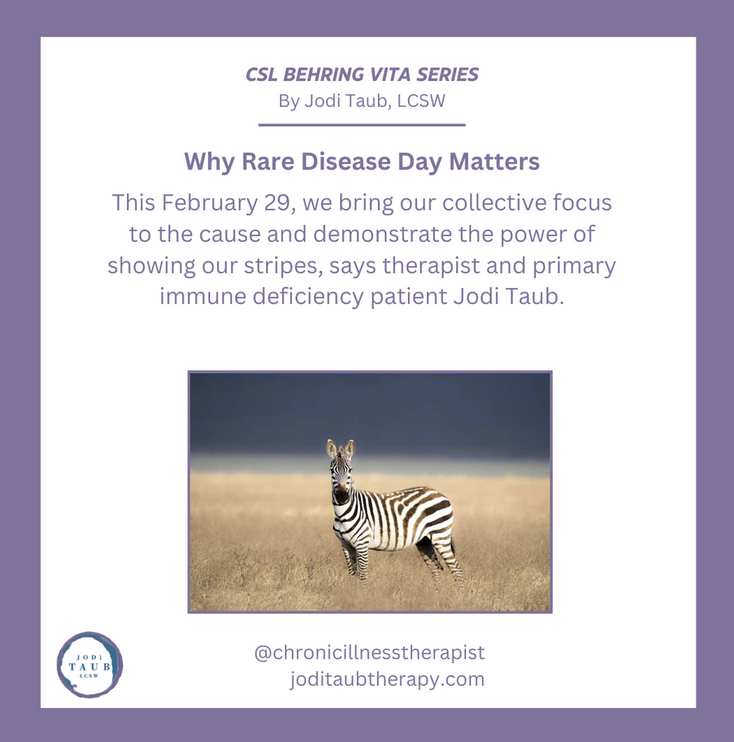
Why Rare Disease Day Matters
This February 29, we bring our collective focus to the cause and demonstrate the power of showing our stripes, says therapist and primary immune deficiency patient Jodi Taub.
Key highlights:
1. RDD encourages collective support
2. RDD can be fun and creative
3. RDD builds community bonds
Accepting Limits, Accepting Help
Sometimes we are capable of completing various tasks, and at other times, we are not. This can lead to unfair judgement and misunderstandings. Please read the article in it's entirety to learn about the 5 strategies to address these fluctuations, and how to ask for help
Key highlights:
1. Assess your capabilities and accept your limitations.
2. Have the conversation.
3. Describe what you need.
4. Remember that giving feels good to the giver.
5. Look for your next opportunity to be the helper.
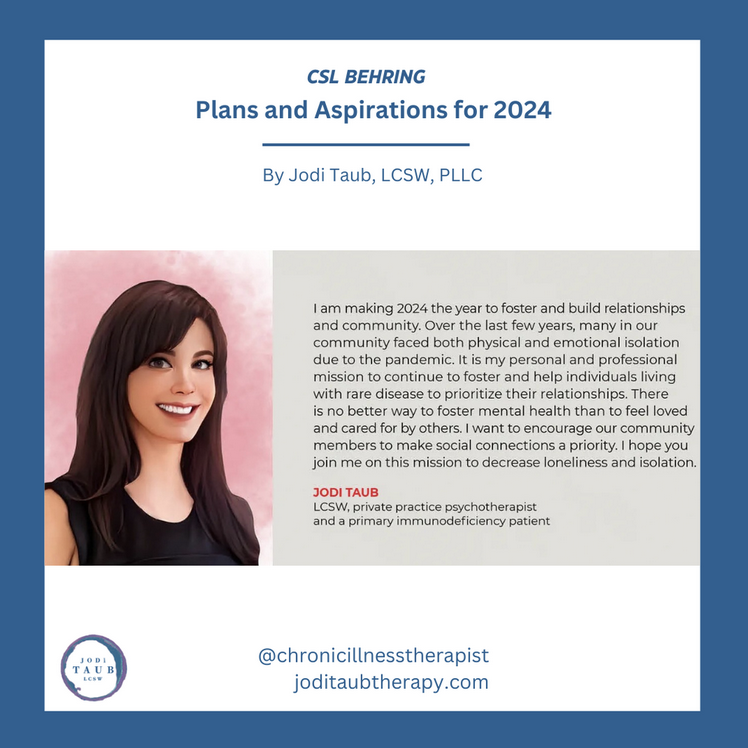
Patient Advocacy Groups Share 2024 Plans
Answering CSL.com’s survey, the leaders of nonprofit patient organizations said they are looking forward to a productive year representing people who live with rare and serious diseases.
What is motivating and inspiring you as we begin a new year?
Leading patients advocates say their organizations will focus on making health care delivery more available and more fair, supporting their patient communities and pushing for scientific advances.

A Year of Progress for Patients
As 2023 comes to a close, leaders in patient advocacy shared accomplishments and highlights in CSL.com’s annual survey.
At year’s end, CSL surveys leaders in patient advocacy – including a few of their own employees – about key initiatives and accomplishments that happened over the last 12 months. As always, they had much to share about the impact they and their organizations made and how they are improving the lives of patients who live with rare and serious conditions.
Make Creativity Your Superpower
Managing a chronic condition can put a squeeze on the time you have for creative pursuits. Get advice on how to leap into something new so you can enjoy the positive impacts on body and mind.
Creative activities can be therapeutic when living with chronic illness.
I highlight 3 reasons:
1. Reducing stress
2. Improving neuroplasticity and brain health
3. Improving connections and decreasing isolation
Overcoming Loneliness in Chronic Illness
Research has shown that living with a chronic disease, especially rare disease, is one of the highest risk factors for loneliness.
If we can identify why and how we are feeling lonely, we can respond with changes designed to address the specific hurt.
1. Social isolation and lack of connection
2. Too little understanding and validation
3. Missing purpose and meaning
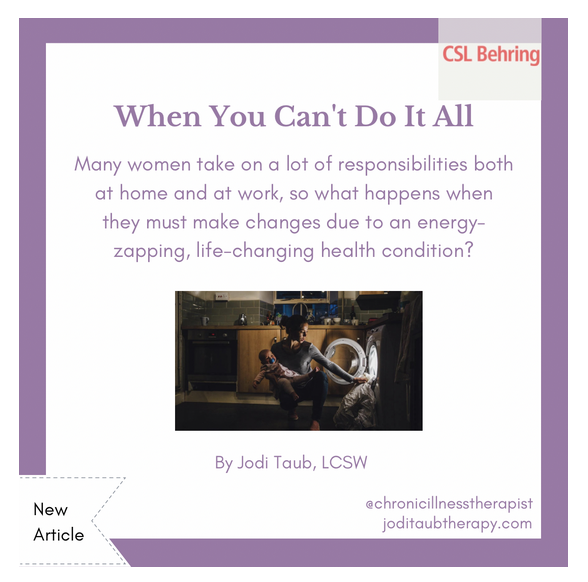
When You Can’t Do It All
It's tough to manage societal and personal expectations to, "do it all." This rings especially true for women who live with rare, chronic health care conditions.
Key highlights:
1. Establish boundaries with family members and loved ones.
2. Remind yourself of the ways that do care and nurture your loved ones.
3. You are still contributing, despite health flares.
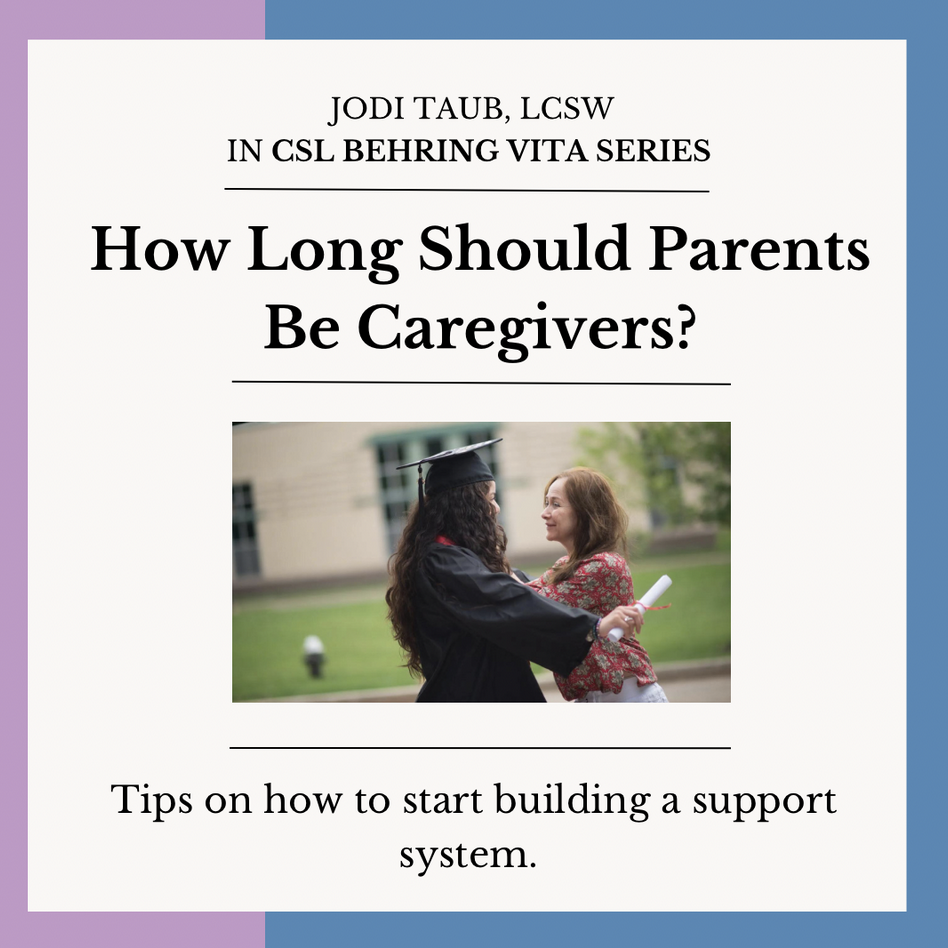
How Long Should Parents Be Caregivers?
As a young person moves into adulthood, it can be time to thank Mom and Dad, tap into their knowledge as caregivers and start building your own support system.
Transitioning to adulthood can be stressful and exciting all at the same time. Young people take strides toward more independence and rely less on their parents. If that young adult has a rare or chronic illness, it’s a good time to shift the responsibility of managing medical care from parents to the now, fully grown child.
Young adults need to learn how to:
Set up appointments and meet with their physicians on their own.
Depend on friends and significant others when they are ill.
Make wise lifestyle choices, which may impact their health.
May Is Mental Health Awareness Month
There are many tools available to help manage our mental health. We often overlook the power of social connections. Studies have shown that our social connections are the greatest indicator of improved mental and physical health.
Please read my three tips backed by peer reviewed studies about why social connections can improve both your physical and mental health!
I also highlight the importance of seeking professional help to address clinical mental health symptoms. Seeking help reflects on a capacity to better cope with stress.
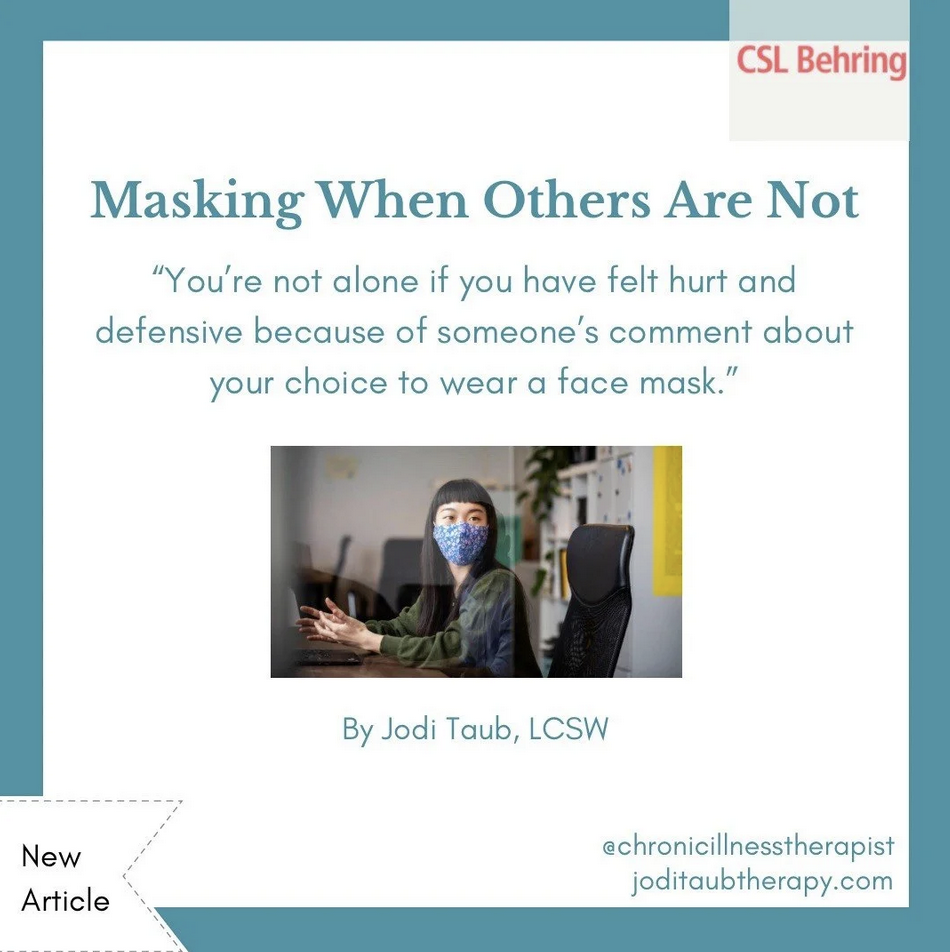
Masking When Others Are Not
For the immunocompromised, wearing a mask in 2023 can invite judgement and criticism.
I recommend three tips for managing pushback as the COVID-19 restrictions are lifted.
1. Convert an awkward moment into a teachable moment.
2. Advocate for yourself.
3. It's normal to feel uncomfortable.
Remember that wearing a mask is an accommodation that allows immunocompromised, high risk folks, and supportive loved ones to move more safely in public. Feeling understood and supported-will help us to live more freely.
5 Relationship Tips for Patients
All long-term relationships can face challenges-and even more so if you have chronic health care conditions. But despite it all, many individuals have strong and sustaining relationships. Here are five areas to help decrease the bumps along the way.
1. Take steps to prevent caregiver burnout.
2. Maintain a partnership that's about more than caregiving.
3. Acknowledge your partner's experience of your illness.
4. Find a good communication style to use when your illness flares.
5. Be proactive about canceled plans and other inevitable situations.
Grownups Need Friends, Too
Friendships are some of the most important relationships in our lives. However, just like any other kind of relationships, they take work to maintain. Please read my tips on how to maintain and form new friendships as an adult.
Consider the following suggestions as gentle guidance. I hope this advice will help you avoid potential pitfalls and steer you toward a healthy, happy partnership.
To learn more, please check out the article.

Celebrating Rare Disease Day 2023
I am thrilled to share mental health guidance about living with rare disease for patients, caregivers and loved ones. Highlights include how the rare disease experience is different. Medical trauma and the difference between other forms of complex and acute trauma. Mental health support for both patients and caregivers. And the importance of prioritizing community support and joy. Hopefully, you will find this discussion both supportive and validating. Feel free to share with loved one to help foster understanding. With gratitude for our rare disease community, Jodi